Table of Contents
- Recommended Range Hood Cleaning Schedule
- Why is Proactive Range Hood Cleaning Important?
-
- Identifying Range Hood Performance Loss
- Range Hood Cleaning Toolkit
- Common Range Hood Mistakes to Avoid
- When to Replace Range Hood Charcoal Filters
- When to Replace Range Hood Parts or Call a Professional
- Clean and Maintain Your Range Hood With Minimal Effort
- Connect with us on social media!
- FAQs
Range hoods remove airborne grease, smoke, impurities, and excess moisture during cooking, but their cleaning and maintenance are often overlooked when it comes to kitchen performance.
Luckily, cleaning and maintaining your range hood is not a complex undertaking. By implementing a simple care routine with some consistency, you can significantly improve indoor air quality, reduce ambient noise, and extend the operational lifespan of your range hood and its components, including the motor, fan, and filters.
To ensure your range hood operates at its best, the range hood experts here at The Range Hood Store recommend a simple proactive cleaning and maintenance schedule that we’ve detailed below.
Recommended Range Hood Cleaning Schedule
Follow this simple, structured schedule to clean and maintain your range hood:
Frequency | Task |
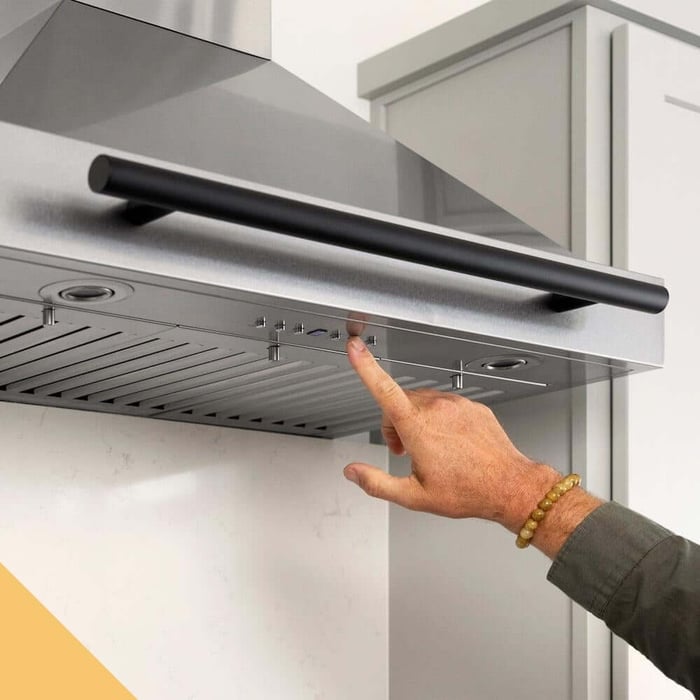
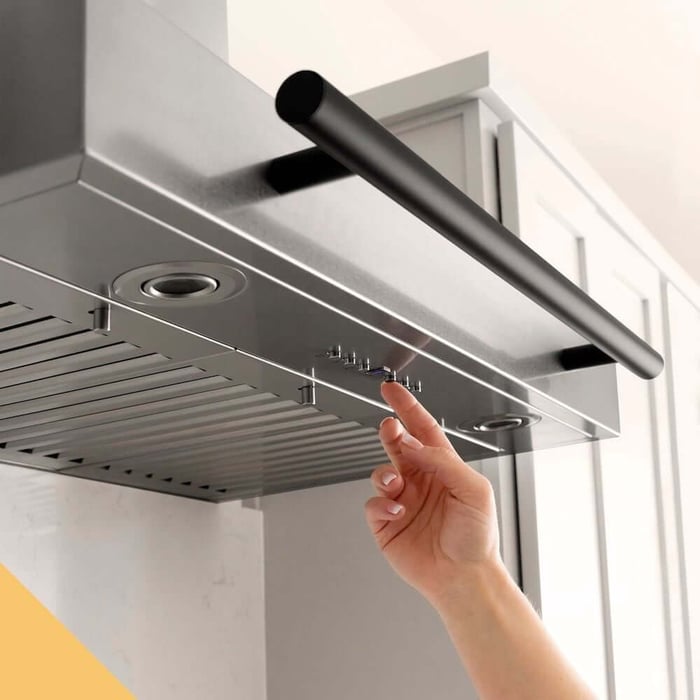
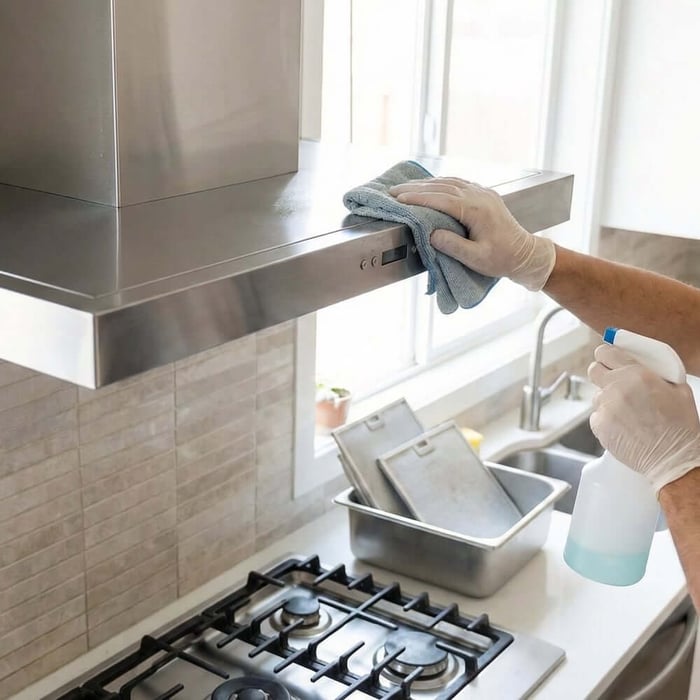
Weekly or Monthly Depending on Use | Exterior Wipe-down Using a microfiber cloth with warm, soapy water or stainless steel cleaner, wipe down the exterior of the range hood to prevent dust and grease buildup. Focus on the underside and the rim. Grease and other vapors settle there first. Avoid abrasive pads (like steel wool), which can scratch the finish. Read our detailed guide on cleaning stainless steel appliances here. |
Every 1-3 Months | Clean the Filters (Non-charcoal) Remove the filters and submerge them in hot water for 15 minutes. Then, using a degreasing dish soap, scrub the filters gently, rinse, and air dry completely before reinstalling. Many range hood brands, such as ZLINE and Hauslane, use dishwasher-safe filters to make this step even easier. Read our detailed guide on how to clean range hood filters here. If you use a charcoal filter or another type of recirculating system in your range hood, DO NOT CLEAN THEM. Charcoal filters should be replaced every 4 to 9 months, depending on use, and cannot be cleaned. We’ve included more information on this below. |
Yearly | Fan and Vent Inspection Turn off the power to the range hood. Most fans can be accessed by removing the filters, but some may require removing a cover. Refer to your owner's manual or contact our customer support team if you have questions. Once you locate the fan, wipe the blades to keep them clean and balanced using a damp cloth. Use a flashlight to look up the duct; if you see thick grease, it’s likely time for a professional duct cleaning. |
Why is Proactive Range Hood Cleaning Important?
When it comes to range hoods, their ability to successfully extract pollutants before they disperse, as well as other performance metrics such as noise level, is maintained through regular cleaning.
Optimal Airflow: Clean ventilation pathways allow the motor to move the intended Cubic Feet per Minute (CFM) without resistance. For more information on CFM, read our CFM guide here.
Structural Preservation: Preventing grease accumulation protects cabinetry and surfaces from corrosive residues.
Mechanical Longevity: Reducing unnecessary drag on the fan motor prevents premature component failure and overheating.
Lower Volume: A clean, balanced fan operates significantly quieter than a dirty one.
Identifying Range Hood Performance Loss
Recognizing the signs of a struggling range hood can prevent costly repairs or a replacement. Monitor your unit for the following symptoms:
Reduced Ventilation: The air isn't clearing as fast as it used to.
Sticky Substances Build-up: You notice a visible layer of tacky grease on the hood or nearby cabinets.
Unusual Noise: Humming, rattling, or vibrations that you haven’t noticed before.
Range Hood Cleaning Toolkit
There’s no need for a specialized toolkit when it comes to cleaning your range hood. You likely have everything you need in your pantry or under the sink:
Dish soap and warm water
Soft cloths or sponges
Non-abrasive degreaser
ZLINE Stainless Steel Cleaner and Polish (STCLT-8)

$19.95
Luxury isn’t meant to be desired - it’s meant to be attainable. ZLINE Stainless Steel Cleaner and Polish (STCLT-8) helps you preserve a pristine shine and high-quality finish by easily eliminating fingerprints, dissolving grease, and removing streaks, smudges, and even… Read More
Common Range Hood Mistakes to Avoid
Overreacting: Before you take anything apart on your range hood, check the basics. Is it plugged in? Is the circuit breaker tripped? Sometimes a "broken" hood is just a loose bulb or a bumped setting.
Abrasive Pads: Never use tools like steel wool to clean your range hood, as these can damage the finish and create micro-scratches that trap grease and harbor bacteria.
Moisture Hazards: Ensure all components, especially filters, are 100% dry before reinstallation to prevent motor moisture damage.
Ignoring Warning Signs: Ignoring minor issues often leads to bigger problems down the road. If something seems off about your range hood, it’s a good idea to investigate.
Overtaxing the Motor: Use the lower airflow settings on your range hood for simmering and other low-heat cooking. This reduces wear and tear on the motor.
When to Replace Range Hood Charcoal Filters
Recirculating (also called ductless) range hoods use charcoal filters to capture and neutralize odors and contaminants before recirculating the filtered air back into the kitchen.
Charcoal filters can not be cleaned and must be replaced. Knowing when their surface area is saturated is key to maintaining kitchen air quality. You can find replacement charcoal filters here.
Look for the signs below to know when it is time to replace your charcoal filter in your recirculating range hood:
Lingering Scents: This is the most reliable indicator. If cooking odors (especially pungent ones like onions or fish) remain noticeable in the kitchen for more than an hour after the fan is turned off, the carbon is likely saturated.
Visual Deterioration: Inspect the filter casing. If the charcoal granules appear "clumped" or if the fabric pre-filter covering the carbon is heavily discolored (yellow or brown), the filter's effectiveness has been compromised.
Audible "Rattle": Gently shake the filter. In many high-quality filters, you should hear the loose carbon granules moving. If it feels heavy or "solid," grease may have seeped into the carbon, binding it together and blocking airflow.
Surface Greasiness: If the exterior of the charcoal filter feels tacky to the touch, it means the primary grease filter has allowed oil to pass through. Once grease coats the charcoal, it can no longer adsorb odors.
When to Replace Range Hood Parts or Call a Professional
While most range hood-related cleaning is DIY-friendly, some things require talking with a pro. Many top-rated range hood manufacturers have extensive customer experience teams that can help find the right replacement part if one should fail. Some brands, such as ZLINE, feature industry-leading lifetime warranties on important range hood components like the motor.
Electrical Malfunctions: Persistent flickering or control board unresponsiveness.
Motor Failure: The motor generates heat or noise but fails to rotate the impeller.
Ducting Obstructions: Significant blockages deep within the ventilation shaft that are inaccessible from either end.
Clean and Maintain Your Range Hood With Minimal Effort
Regular range hood cleaning is an investment in your home’s air quality and the longevity of your other kitchen appliances and cabinetry. By shifting from reactive cleaning to a proactive cleaning schedule, you ensure a cleaner, quieter, and more efficient cooking environment.
Here at The Range Hood Store, we carry a large selection of range hoods that are simple to clean and maintain from the top-rated brands in the industry. Browse our selection or contact us to speak with one of our product experts today!
Connect with us on social media!
Facebook: The Range Hood Store
Instagram: @therangehoodstore
YouTube: The Range Hood Store
Pinterest: @TheRangeHoodStore
FAQs
How often should I clean my range hood filters?
For most households, range hood filters should be cleaned every 1 to 3 months. If you cook frequently with oil or high heat (like frying or searing), aim for once a month. Regular cleaning prevents grease buildup that can strain the motor and reduce suction power.
Can I put my range hood filters in the dishwasher?
Yes, many modern range hood filters (like those from ZLINE or Hauslane) are dishwasher-safe. However, always check your owner’s manual first. If they aren't dishwasher-safe, or if they are heavily soiled, soak them in hot water with a degreasing dish soap for 15 minutes before scrubbing.
How do I know if my charcoal filters need to be replaced?
Unlike metal filters, charcoal filters cannot be cleaned and must be replaced every 4 to 9 months. Signs that it’s time for a replacement include lingering cooking odors long after the fan is off, a "tacky" or greasy feeling on the filter surface, or a solid (rather than rattling) sound when the filter is shaken.
Why is my range hood making a vibrating or rattling noise?
Unusual noises are often caused by unbalanced fan blades due to grease accumulation or a loose component. Try cleaning the fan blades with a damp cloth. If the noise persists, it could indicate a motor issue or an obstruction in the ductwork that may require professional inspection.
What is the best way to clean a stainless steel range hood?
To maintain a streak-free shine, use a microfiber cloth and a specialized stainless steel cleaner or warm, soapy water. Always wipe in the direction of the grain. Avoid abrasive pads like steel wool, as these can create micro-scratches that trap bacteria and ruin the finish.
Does cleaning my range hood improve air quality?
Absolutely. A clean range hood operates at its intended CFM (Cubic Feet per Minute), effectively removing smoke, steam, and airborne grease. When filters or fans are clogged, these pollutants linger in your kitchen, affecting both air quality and the cleanliness of your cabinetry.