Table of Contents
If you’re choosing a new oven, you’ve probably been comparing finishes, capacities, and cooking modes.
But did you know that the most important decision is one that can affect temperature consistency, installation requirements, cleaning, operating costs, and the types of food the oven excels at cooking?
That’s the choice between buying a gas or electric oven.
Gas and electric ovens can both bake, roast, broil, and handle everyday meals, but their differences mean they create heat differently.
For many homeowners, an electric oven is the stronger choice for consistent baking and flexible kitchen design.
But gas ovens shouldn’t be ruled out entirely. A gas oven may still be the stronger choice for those who already have a gas connection or want to avoid installing a new high-voltage electrical circuit.
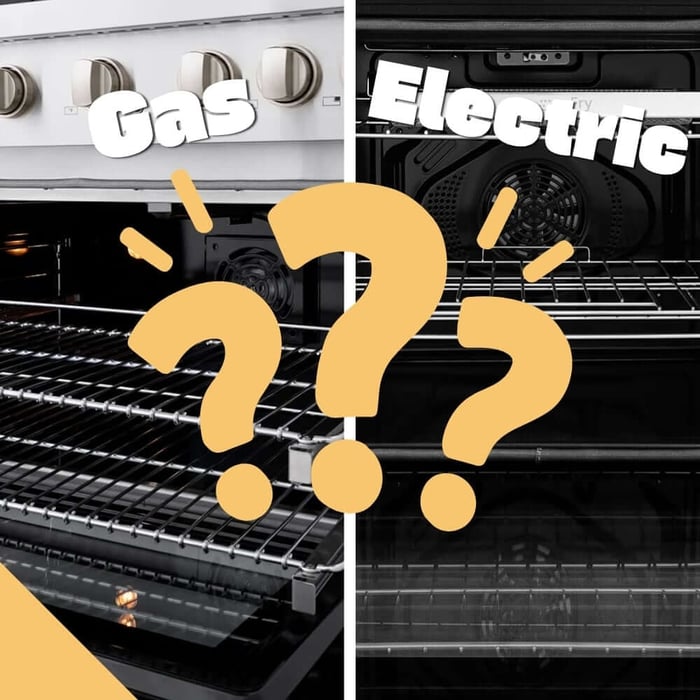
This gas vs. electric oven comparison explains the differences and practical considerations behind each option.
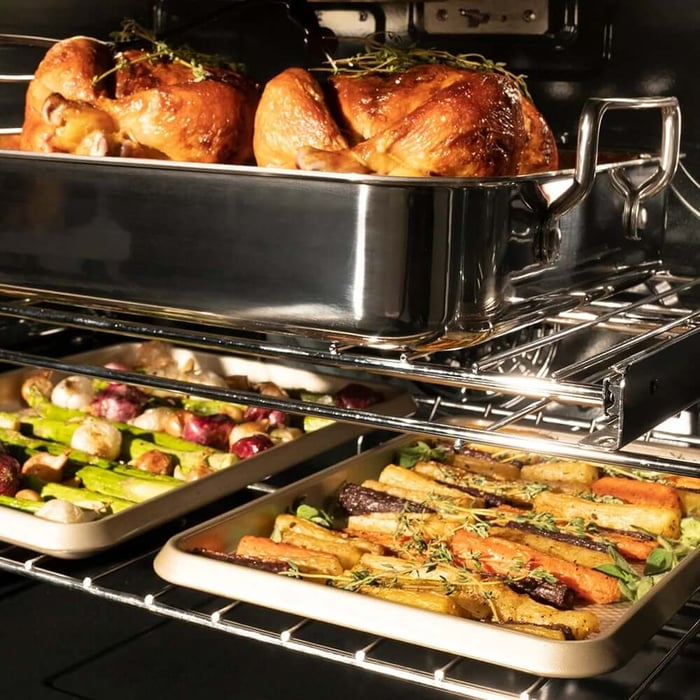
How Ovens Cook
Once you close the oven door, gas and electric models create and distribute heat in two very different ways.
How an Electric Oven Cooks
Electric ovens use metal heating coils (or elements) that cycle on and off to maintain a consistent temperature.
Because electric elements can be controlled independently, electric ovens often maintain temperatures more consistently and provide more predictable results across multiple racks.
How a Gas Oven Works
Gas ovens use a burner tube at the base of the cavity that ignites natural gas or propane. The primary burner is usually located beneath the oven floor, although exact configurations vary by model.
Modern gas ovens use electronic ignition and temperature sensors rather than relying on a continuously burning pilot light.
Is a Gas or Electric Oven Better for Baking?
We’ll be honest. An electric oven is generally the better choice for frequent baking.
Electric elements cycle in a controlled manner and create a relatively dry oven environment, which cakes, cookies, pastries, and other baked goods such as a Dutch baby benefit from.
Gas ovens can still produce excellent baked goods, but their heat may be more concentrated near the bottom of the cavity, meaning you may need to adjust racks, rotate pans, or use an oven thermometer to understand how a particular model behaves.
A well-designed gas oven may out-bake a poorly calibrated electric model.

Is a Gas or Electric Oven Better for Roasting?
Both fuel types roast effectively with only slight differences in how they perform.
Gas ovens create a small amount of water vapor during combustion, which in turn creates a slightly more humid cooking environment, meaning moisture can be retained more easily.
For browning and crisping, an electric convection oven can help create crisp poultry skin and caramelized vegetables.
Is a Gas or Electric Oven Easier to Clean?
Nobody likes cleaning their oven.
Many electric ovens conceal the lower heating element beneath a smooth oven floor, which reduces the number of exposed components that crumbs, grease, and spills can collect near, giving electric ovens a slight advantage when it comes to routine cleaning
Gas ovens use vents or openings to move the required airflow around the burner assembly, and spills near these areas may be more difficult to clean.
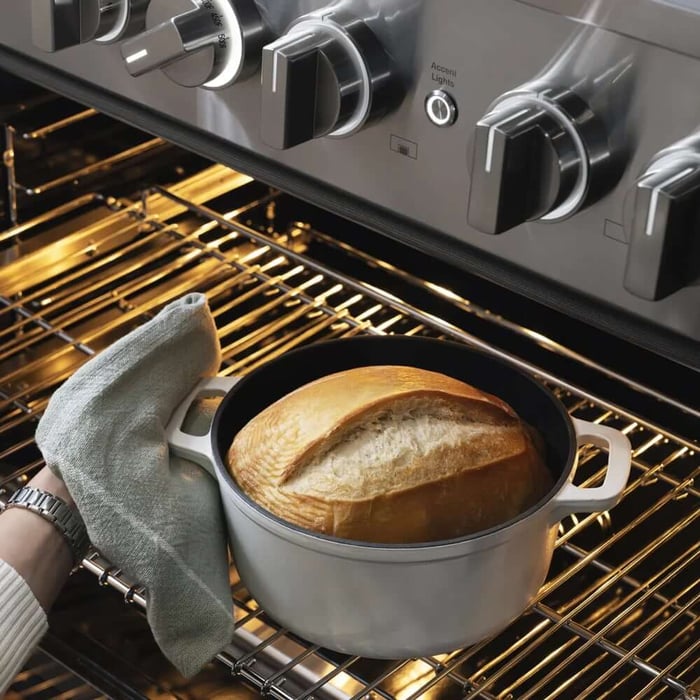
Gas vs. Electric Oven Operating and Installation Costs
Unless you’re looking between brands or between classes (e.g., entry-level electric vs luxury gas), an electric oven and a gas oven will have a very similar upfront cost, so if you’re wondering which is better for long-term operating costs, consider local utility prices and how frequently the appliance is used.
Natural gas has historically cost less than electricity.
However, rates vary considerably by state, utility provider, and season. Homes with solar panels or favorable electric rates may find that an electric oven costs less to operate.
For most households, the difference in monthly oven operating costs will be less significant than the cost of installation if adding or changing the required utility connection is part of the project.
Consider:
Whether the kitchen already has a gas line
Whether a dedicated electrical circuit is available
Local gas and electricity rates
Installation labor
Permit requirements
Appliance efficiency
Typical weekly oven use
Most electric ovens require a dedicated 240-volt circuit or are hardwired rather than plugged into a conventional outlet.
A gas oven requires a properly installed natural gas or propane supply line. Most modern gas appliances also require electricity to operate the ignition system, controls, lights, fans, and display.
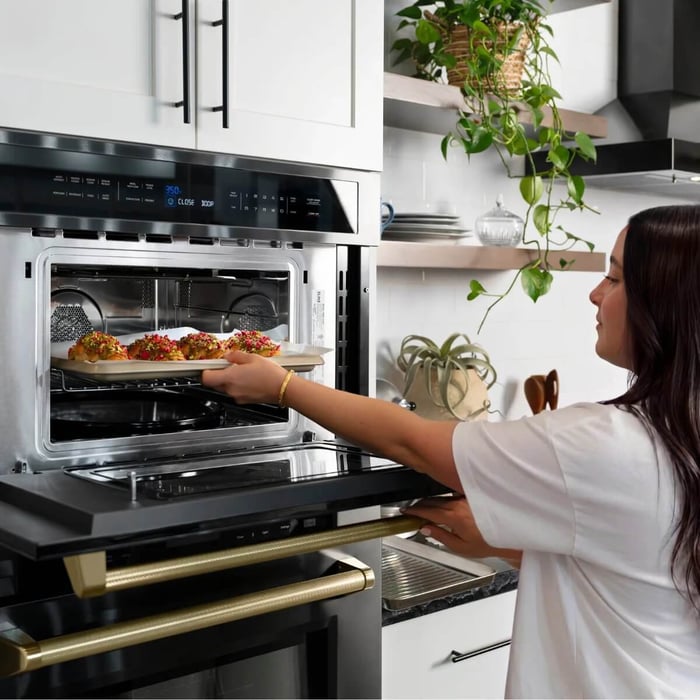
Wall Ovens vs. Range Ovens
At this point, it helps to clear something up when it comes to the term “oven”, which often gets lumped in with terms like “stove” and “range”.
An oven is not a stove, and it is not a range. An oven is simply a closed box that is used to cook, bake, roast, and dry food.
That’s why microwaves are also called microwave ovens, despite most home cooks agreeing that a microwave oven is not a substitute for a “real” oven.
(Some microwaves have convection cooking capabilities, which enable them to perform more like a traditional oven.)
Let’s cut to the chase before going completely off track: if you’re looking for a “real” oven, you’re looking for either a wall oven or a range.
Wall Ovens: Installed directly into walls or cabinetry at eye level, wall ovens are predominantly electric because electric heating elements heat enclosed cabinet cutouts far more predictably and safely.
ZLINE 30 in. Professional True Convection Single Wall Oven with Air Fry and Self Clean in Stainless Steel (WAS-30)

$2,039.99
$2,399.99
The ZLINE 30 in. Professional True Convection Single Wall Oven with Air Fry and Self Clean in Stainless Steel (WAS-30) provides a professional culinary experience by pairing reliable, everyday performance with contemporary convection cooking capabilities and cutting-edge air frying technology.… Read More
Ranges: An all-in-one appliance with a cooktop on top and an oven cavity below. Range ovens are readily available in gas or electric.
ZLINE 30 in. 4.2 cu. ft. Paramount Dual Fuel Range with 4 Burner Gas Cooktop and Electric Convection Oven in Stainless Steel (SDR30)

$2,699.99
$2,999.99
Luxury isn’t meant to be desired - it’s meant to be attainable. The ZLINE 30 in. 4.2 cu. ft. Paramount Dual Fuel Range with 4 Burner Gas Cooktop and Electric Convection Oven in Stainless Steel (SDR30) combines the versatility of… Read More
Where Cooktops Enter the Picture: Dual Fuel Ranges
If you are looking for an electric oven cavity but still want the open-flame control of a gas cooktop in a single appliance, you’re looking for a dual fuel range.
This hybrid design gives you high-heat flame control for stir-frying or searing on the cooktop, paired with precise, dry heat inside the oven for baking.
Keep in mind that dual fuel ranges require both a gas supply line and a 240-volt electrical connection.

Which Oven Belongs in Your Kitchen?
For enthusiastic bakers, an electric oven is the strongest overall choice. For an existing gas kitchen with limited electrical capacity, a gas oven may be the more practical and economical replacement.
Contact our oven experts today for personalized assistance and professional project support.
Connect with us on social media!
Facebook: The Range Hood Store
Instagram: @therangehoodstore
YouTube: The Range Hood Store
Pinterest: @TheRangeHoodStore
FAQs
Is a gas or electric oven better for baking?
Electric ovens are generally preferred for baking because they tend to provide more even heat and consistent temperatures. However, performance varies by model, and a high-quality gas oven can still produce excellent results.
Does an electric oven use any gas?
No. A fully electric oven uses electrical heating elements and does not require a natural gas or propane connection.
Are gas ovens more expensive than electric ovens?
Purchase and operating costs vary by model and location. Gas may have lower utility costs in some areas, but installing a gas line can make a gas oven more expensive overall. Similarly, adding a 240-volt circuit can increase the installation cost of an electric oven.
Do gas ovens cook food faster?
Not necessarily. Cooking and preheating speeds depend on oven size, burner output, element wattage, insulation, convection technology, and the selected cooking mode.
Can a wall oven be gas?
Yes, but gas wall ovens are far less common than electric wall ovens. Electric models offer a much broader range of sizes, configurations, and features.
Is a dual fuel range worth it?
Yes, a dual fuel range may be worthwhile for cooks who specifically want a gas cooktop and an electric oven.