Table of Contents
A clean dishwasher means cleaner dishes, a fresher-smelling kitchen, and better performance over time. No matter what brand you own, regular maintenance helps your appliance run efficiently and last longer. Follow this simple guide to clean your dishwasher and keep your dishwasher in top shape from the filter to the exterior.
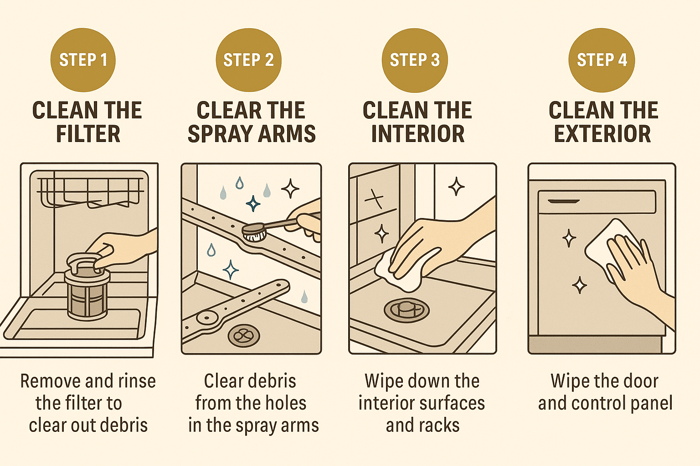
Step 1: Clean the Filter
Your dishwasher’s filter catches food particles and prevents clogs in the drainage system. If it gets dirty, your dishes might not come out fully clean, and you could start noticing odors or water not draining properly.
How to Clean the Filter:
Power Down: Turn off or unplug your dishwasher. Open the door and remove the bottom rack to access the filter area.
Remove the Filter: Most dishwashers have a cylindrical filter that twists out. Underneath, there may be additional mesh or flat filters. Remove all parts carefully.
Rinse Thoroughly: Rinse the filter pieces under warm water. Use a soft brush or an old toothbrush to scrub off grease or trapped food. Avoid using anything too abrasive that might damage the mesh.
Reinstall: Once clean, reassemble the filters in the correct order and lock them back into place.
Tip: Clean the filter at least once a month or when you notice poor drainage or cloudy dishes.
Step 2: Clear the Spray Arms
Spray arms are responsible for delivering high-pressure water to clean your dishes. Your dishwasher's performance can suffer when the holes in these arms get clogged with food or hard water deposits.
How to Clean Spray Arms:
Remove Racks: Take out both the top and bottom racks to get full access.
Inspect and Unclog: Check each spray hole for blockages. Use a toothpick or small nylon brush to gently poke out debris. Avoid metal tools.
Soak if Needed: If there's visible buildup, soak the spray arms in warm, soapy water or a vinegar solution for 10 to 15 minutes, then rinse thoroughly.
Reattach: Put the spray arms back in place and make sure they spin freely.
Tip: Cleaning the spray arms every month helps ensure consistent, even cleaning.
Step 3: Clean the Interior
Over time, soap scum, grease, and mineral deposits can build up inside your dishwasher. A clean interior improves both hygiene and performance.
How to Keep the Interior Clean:
Wipe It Down: Use a damp cloth or sponge to wipe the inside walls, door, and rubber gaskets. Pay attention to crevices and door seals where grime can hide.
Run a Cleaning Cycle: Run an empty cycle with hot water and a small amount of dish detergent or white vinegar. Choose a sanitize or heavy-duty setting if available.
Use a Dishwasher Cleaner: Consider using a dishwasher-cleaning tablet or solution designed to break down limescale and grease. Follow the product instructions.
Tip: Doing this every month or two helps prevent musty smells and keeps the inside fresh.
Step 4: Clean the Exterior
The outside of your dishwasher deserves just as much attention, especially if it's stainless steel or black stainless.
ZLINE Stainless Steel Cleaner and Polish (STCLT-8)

$19.95
Luxury isn’t meant to be desired - it’s meant to be attainable. ZLINE Stainless Steel Cleaner and Polish (STCLT-8) helps you preserve a pristine shine and high-quality finish by easily eliminating fingerprints, dissolving grease, and removing streaks, smudges, and even… Read More
Exterior Cleaning Tips:
Daily Wipe-Down: Use a soft cloth and mild soap to remove fingerprints, grease, and drips. Avoid harsh chemicals or abrasive pads.
Use the Right Cleaner: For stainless steel surfaces, a dedicated appliance cleaner or polish can leave a streak-free shine.
Don’t forget the Details: Wipe handles, buttons, and edges where grime often collects. Dry immediately to prevent water spots.
Tip: A clean exterior makes your kitchen look polished and well-maintained.
Recommended Tools & Cleaners
To make cleaning easier and more effective, keep these items handy:
Microfiber Cloths – Gentle on surfaces and great for streak-free cleaning.
Soft Brushes – Nylon or toothbrush-style brushes help clean filters and spray arms.
Dishwasher Cleaning Tablets – Use every 1–2 months to deep clean.
Mild Detergent & Rinse Aid – Always use high-quality dishwasher detergent and a rinse aid for optimal performance.
Conclusion
Keeping your dishwasher clean doesn’t have to be a chore. Just a little routine maintenance like cleaning the filter, checking the spray arms, wiping down surfaces, and running the occasional cleaning cycle can go a long way.
Whether your dishwasher is brand-new or has been with you for years, regular care ensures it continues to perform at its best, leaving you with sparkling dishes and one less thing to worry about in the kitchen.
Looking for more guidance on how to clean your dishwasher? Contact us to speak with one of our experts today!
Connect with us on social media!
Facebook: The Range Hood Store
Instagram: @therangehoodstore
YouTube: The Range Hood Store
Pinterest: @TheRangeHoodStore
FAQs
How often should I clean my dishwasher?
For most households, a light cleaning once a month is ideal. This includes rinsing the filter, checking the spray arms, and wiping down the interior. A deeper clean with vinegar or a dishwasher cleaner every one to two months helps prevent odors and buildup.
Why is it important to clean the dishwasher filter?
The filter traps food particles to prevent clogs in the drain. When it becomes dirty, it can cause cloudy dishes, unpleasant smells, and poor drainage. Regular filter cleaning keeps water flowing properly and improves overall wash performance.
How do I know if my dishwasher filter needs cleaning?
Common signs include dishes coming out dirty, standing water at the bottom of the tub, or musty odors after a cycle. Even without these signs, routine monthly cleaning is recommended.
Can I put my dishwasher filter in the dishwasher to clean it?
No. Filters should be removed and rinsed by hand under warm water. Using a soft brush helps remove grease and debris without damaging the mesh.
Why do spray arms need to be cleaned?
Spray arms deliver pressurized water to clean dishes. If their holes become clogged with food or mineral deposits, water cannot circulate properly, leading to uneven or incomplete cleaning.
What is the safest way to unclog spray arm holes?
Use a toothpick or a small nylon brush. Avoid metal tools, which can damage the spray arms and permanently affect water flow.
How can I remove odors from my dishwasher?
Odors are usually caused by food residue or grease buildup. Cleaning the filter, wiping down the door seals, and running an empty hot-water cycle with vinegar or a dishwasher cleaner will help eliminate smells.
Is vinegar safe to use in my dishwasher?
White vinegar is generally safe for occasional cleaning cycles and works well to break down grease and mineral buildup. It should be used sparingly and not combined with detergent in the same cycle.
Should I use a dishwasher cleaning tablet?
Dishwasher cleaning tablets are effective for deep cleaning and descaling. Using one every one to two months can help maintain performance, especially in areas with hard water.
How do I clean the rubber door gasket?
Wipe the gasket with a damp cloth or sponge and mild soap. Pay close attention to folds and creases where grime can collect. Keeping the gasket clean helps prevent leaks and odors.
What is the best way to clean the dishwasher exterior?
Use a soft cloth with mild soap and water for daily cleaning. For stainless steel finishes, a dedicated appliance cleaner or polish helps remove fingerprints and maintain a streak-free appearance.
Can harsh cleaners damage my dishwasher?
Yes. Abrasive pads and strong chemical cleaners can scratch surfaces, damage finishes, and degrade seals over time. Mild detergents and soft cloths are always recommended.
Does cleaning my dishwasher improve its lifespan?
Regular maintenance reduces strain on internal components, improves water circulation, and prevents clogs. Over time, this can extend the life of your dishwasher and keep it running efficiently.
Will a clean dishwasher actually make dishes cleaner?
Yes. A clean filter, clear spray arms, and residue-free interior allow water and detergent to work as intended, resulting in better cleaning performance and clearer, spot-free dishes.
What tools should I keep on hand for dishwasher cleaning?
Microfiber cloths, a soft brush or toothbrush, mild detergent, white vinegar, and dishwasher cleaning tablets cover nearly all routine maintenance needs.