Table of Contents
- Can Microwave Range Hoods be Ductless?
- What is the Difference Between Ducted and Ductless Microwave Range Hoods?
- Can All Microwave Range Hoods Be Converted to Ductless?
- How do you convert a Microwave Range Hood to Ductless?
- Why a Ductless Microwave Range Hood Might Be Best for Small Kitchens or Apartments
- FAQs
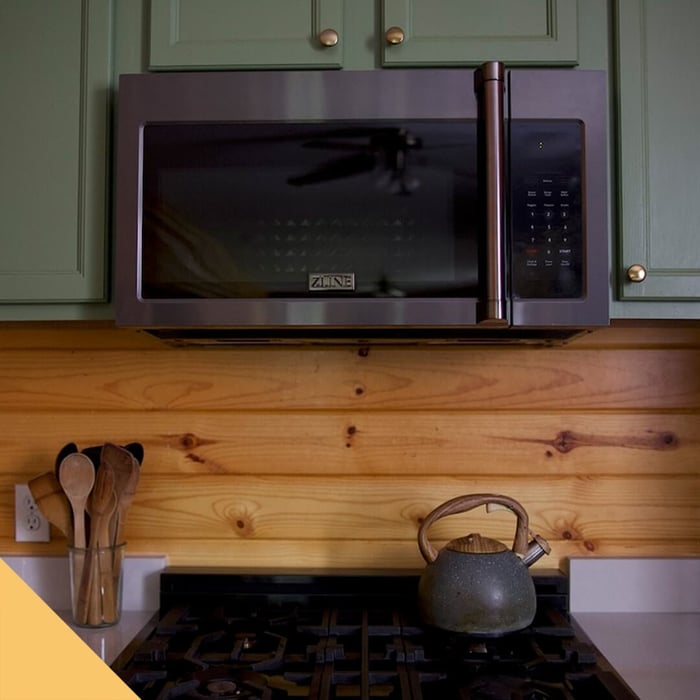
Over-the-range microwaves, also known as microwave range hoods, combine the cooking capability of a microwave with the ventilation capability of a range hood, making an over-the-range microwave a great choice for kitchens where a traditional range hood is not practical or desired.
Can Microwave Range Hoods be Ductless?
The short answer is: Yes, microwave range hoods can be ductless by using filters to convert them to recirculate the air back into the kitchen.
Converting a microwave range hood to ductless means more flexibility in terms of placement, allowing you to optimize your kitchen layout. Ductless microwave range hoods are ideal for small kitchens or apartments where external venting is not possible.
ZLINE 30 in. Stainless Steel Over the Range Convection Microwave Oven with Traditional Handle (MWO-OTR-H-30)

$620.49
$729.99
Luxury isn't meant to be desired - it's meant to be attainable. Designed in Lake Tahoe, USA, the ZLINE 30 in. Stainless Steel Over the Range Convection Microwave Oven with Traditional Handle (MWO-OTR-H-30), and Sensor Cooking provides a professional culinary… Read More
What is the Difference Between Ducted and Ductless Microwave Range Hoods?
Ducted systems work by venting air to the outside, completely removing smoke, grease, and odors from a kitchen.
Ductless systems use filters to recirculate air within the kitchen, trapping grease and odors before releasing the filtered air back into the room.
Can All Microwave Range Hoods Be Converted to Ductless?
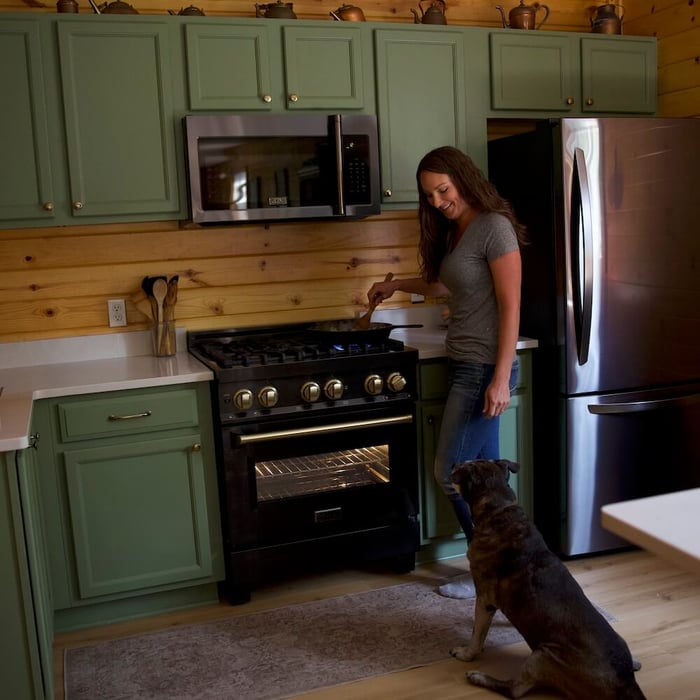
Not all over-the-range microwaves can be converted to ductless. It's important to check if your model is designed for this conversion.
How do you convert a Microwave Range Hood to Ductless?
Converting a microwave range hood to ductless will vary based on the model. However, most microwaves designed to be converted will have a similar process that involves either snapping in or sliding in a filter.
We’ll use ZLINE’s Recirculating Over-the-Range Microwave (MWO-OTRCFH-30) as an example, which uses a slide-in filter.
- Step 1: Unplug and disconnect the microwave from all electrical sources. In cases of regular installation in accordance with ZLINE’s manufacturer instructions, it will not be necessary to remove the microwave.
- Step 2: Locate the two screws on the top of the microwave near the door. The first screw will be above the handle on the vented cover. The second screw will be on the opposite side, slightly behind the vented cover. The screws are circled in red in the image below.
- Step 3: Remove the screw above the handle on the vented cover and set it aside in a safe place.
- Step 4: Remove the screw located slightly behind the vented cover and set it aside in a safe place.
- Step 5: Pull the vented cover toward you to remove it and reveal the charcoal filter. Be careful not to damage the tabs on the top or bottom of the vented cover.
- Step 6: Slide the filter in flat, then push down on the bottom of the filter to lock it in place.
- Step 7: Replace the vented cover and securely reattach it with the screws.
- Step 8: Reconnect your ZLINE Over-the-Range Microwave to power and test to ensure the air is circulating correctly through the filter and vent.
If you use a recirculating ZLINE Over-the-Range Microwave (MWO-OTR) to ventilate your cooktop, you’ll want to replace the MWO-CF charcoal filter every 6 to 9 months, depending on your cooking habits. Taking a few moments to replace these filters can make a world of difference in preserving the air quality in your kitchen.
Why a Ductless Microwave Range Hood Might Be Best for Small Kitchens or Apartments
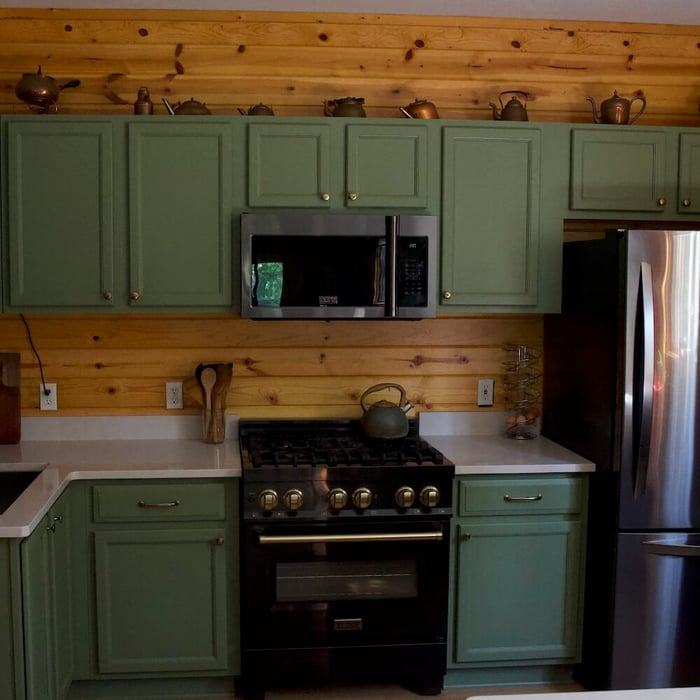
Ductless range hoods inside over-the-range microwaves help ensure that no kitchen is left behind when it comes to ventilation. Ductless microwave range hoods offer a flexible, easy-to-install solution for many kitchens, especially in smaller spaces.
Consider the benefits of ductless microwave range hoods based on your kitchen needs.
FAQs
Are microwave range hoods ductless?
Yes, microwave range hoods can be ductless. Many over-the-range microwaves are designed to operate in ductless mode by using charcoal filters that clean the air and recirculate it back into the kitchen.
What does ductless mean for a microwave range hood?
Ductless means the microwave range hood does not vent air outside the home. Instead, it pulls air through grease and charcoal filters to capture odors and particles before releasing the filtered air back into the kitchen.
What is the difference between ducted and ductless microwave range hoods?
Ducted microwave range hoods vent smoke, heat, and odors outside through ductwork, offering stronger ventilation. Ductless models rely on filters and are easier to install but do not remove air from the home entirely.
Can all microwave range hoods be converted to ductless?
No. Not all microwave range hoods are designed for ductless conversion. It is important to check the manufacturer’s specifications to confirm whether a particular model supports recirculating operation.
How do I know if my microwave range hood supports ductless installation?
You can verify this by reviewing the product manual or specifications. Models designed for ductless use will specify compatibility with charcoal filters or recirculating kits.
How is a microwave range hood converted to ductless?
Most conversions involve installing a charcoal filter behind the vented cover of the microwave. The exact process varies by model but typically requires removing the vent cover, inserting the filter, and reinstalling the cover.
Are ductless microwave range hoods effective?
Ductless microwave range hoods are effective for light to moderate cooking, especially in smaller kitchens. While they do not remove air as efficiently as ducted systems, they significantly improve air quality when proper filters are used and replaced regularly.
How often should charcoal filters be replaced in ductless microwaves?
Charcoal filters should typically be replaced every 6 to 9 months, depending on how often you cook. Regular replacement is essential for maintaining proper airflow and odor control.
Are ductless microwave range hoods good for apartments or small kitchens?
Yes. Ductless microwave range hoods are ideal for apartments, condos, and smaller kitchens where installing external ductwork is not possible or permitted.
Do ductless microwave range hoods remove grease?
Yes. Grease filters capture grease particles, while charcoal filters focus on odors and airborne contaminants. Both are necessary for effective recirculating ventilation.
Is a ductless microwave range hood better than no ventilation at all?
Absolutely. While ducted ventilation is preferred when possible, ductless microwave range hoods still provide meaningful air filtration and are far better than having no ventilation over the cooktop.
Are ZLINE microwave range hoods ductless-capable?
Yes. ZLINE offers over-the-range microwaves designed to operate in ductless mode using replaceable charcoal filters, making them a practical solution for kitchens without exterior venting.
What should I consider before choosing a ductless microwave range hood?
You should consider your cooking habits, kitchen size, filter replacement frequency, and whether stronger ventilation may be needed. Ductless microwave range hoods work best for everyday cooking rather than heavy frying or high-heat use.
Bottom line: are ductless microwave range hoods a good option?
Yes. Ductless microwave range hoods offer flexibility, easy installation, and functional ventilation for kitchens where ducting is not feasible, making them a smart and practical choice for many homes.