Table of Contents
- Introduction
- How to Remove Fingerprints from Stainless Steel Appliances
- How to Remove Dents from Stainless Steel Appliances
- How to Remove Scratches from Stainless Steel Appliances
- How to Remove Water Stains from Stainless Steel Appliances
- How to Remove Grease from Stainless Steel Appliances
- How to Clean a Stainless Steel Dishwasher Tub
- Conclusion
- Connect with us on social media!
- FAQs
Introduction
Stainless steel appliances are the pinnacle of modern kitchen elegance, blending durability with a sleek, timeless aesthetic. However, maintaining that pristine shine can sometimes feel like an uphill battle, which is why we published our guide, How to Clean Stainless Steel Appliances: Our Tips for a Sparkling Shine. We’ve received some further questions about how to handle dents, scratches, water stains, and fingerprints on stainless steel. In this blog, we'll help you tackle these common concerns head-on.
Explore Stainless Steel Kitchen Appliances
How to Remove Fingerprints from Stainless Steel Appliances
Fingerprints are perhaps the most common and frustrating blemishes when cleaning stainless steel. The good news is that they're also one of the easiest to remove. A simple wipe with a damp cloth followed by a polish can work wonders. Our favorite cleaner and polish is ZLINE's Stainless Steel Cleaner, which offers an effective solution, leaving a protective layer that helps prevent future marks.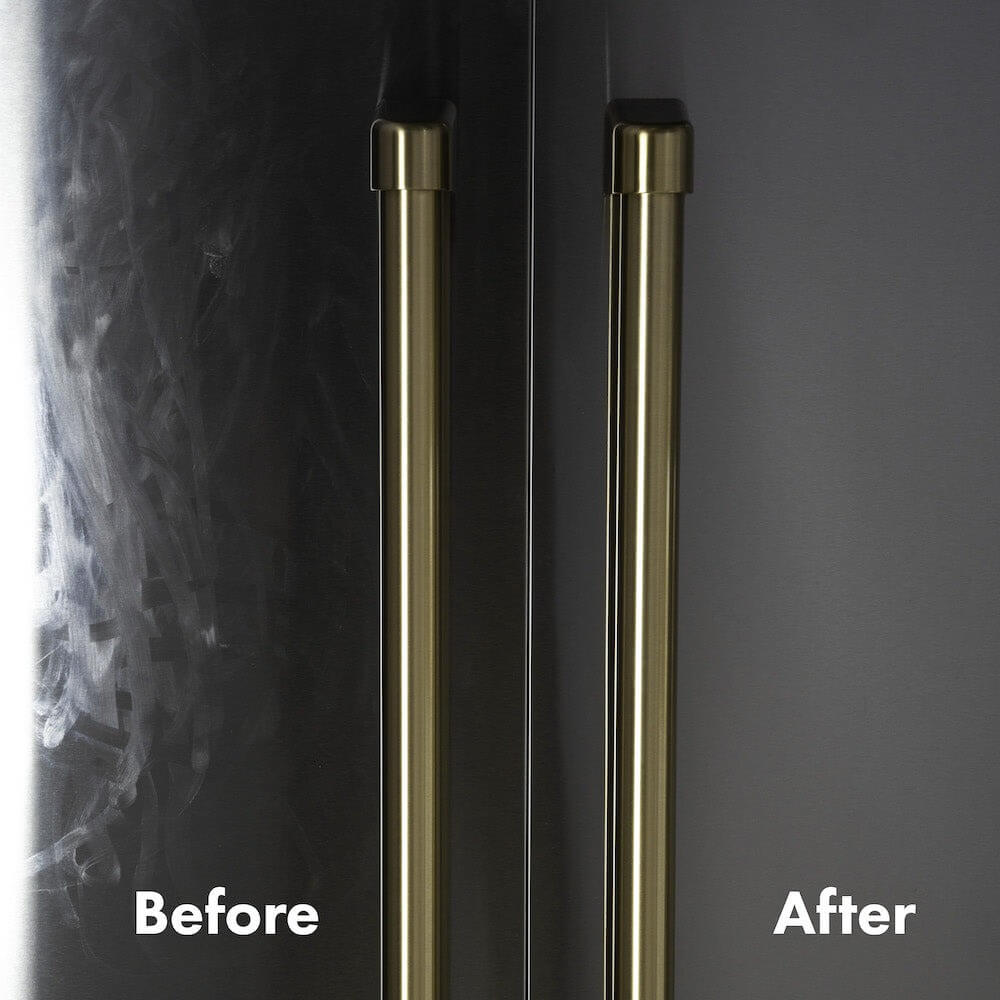
ZLINE Stainless Steel Cleaner and Polish (STCLT-8)

$19.95
Luxury isn’t meant to be desired - it’s meant to be attainable. ZLINE Stainless Steel Cleaner and Polish (STCLT-8) helps you preserve a pristine shine and high-quality finish by easily eliminating fingerprints, dissolving grease, and removing streaks, smudges, and even… Read More
How to Remove Dents from Stainless Steel Appliances
Dents can mar the smooth surface of stainless steel, but they're not necessarily permanent. Here are a few techniques you can use to get rid of any dents.
Push the dent out:
If you can get behind the dent, you may be able to simply push the dent back into place
Use a plunger or suction cup:
You can use a special automotive dent remover or even the classic toilet plunger
Hot and Cold Method:
You can use a heat gun or hot water to make the surface hot. Use dry ice or a can of air duster to create a cold surface. Rapidly heating and then quickly cooling it might shock the metal into flattening.
How to Remove Scratches from Stainless Steel Appliances
Scratches can distract from the sleek appearance of your stainless steel appliances but fear not. With the right approach, you can minimize or even remove these blemishes. The key lies in understanding the grain of your stainless steel and using gentle, yet effective products coupled with appropriate techniques to buff out the scratches.
Baking Soda:
Add water and baking soda to make a paste, put it on the surface of the metal, and scrub lightly. Then wipe off the baking soda and wipe the surface with a damp microfiber cloth.
Abrasive Pad:
For deeper scratches, it may be necessary to rub them out with an abrasive pad. We recommend using a kit specifically designed to be used on kitchen appliances.
How to Remove Water Stains from Stainless Steel Appliances
Water stains, often resulting from hard water, can leave unsightly spots on stainless steel. However, they can be easily addressed with a stainless steel cleaner. If you are in a pinch, try using one of these strategies to get your appliances looking spotless:
Rubbing Alcohol:
Gently rub the water stains, working in the direction of the stainless steel's grain.
Olive Oil:
Apply the oil to the stain, again remembering to rub in the direction of the stainless steel's grain. Then wipe again with a clean, dry cloth to remove the residual oil.
Lemon Juice and Baking Soda (best for horizontal surfaces):
Use a thin layer of lemon juice, and let it sit for five minutes. Next, sprinkle the area with a thin layer of baking soda. Wipe the area down with a clean microfiber cloth or paper towel. Always rub in the direction of the stainless steel's grain. Note that you may need to apply more lemon juice as some of the baking soda dissolves. Wipe the whole area off with a clean, damp cloth, and allow it to air dry.
How to Remove Grease from Stainless Steel Appliances
Kitchen appliances frequently fall victim to grease buildup. Regular cleaning with a product specifically designed for stainless steel can effectively cut through the grime. For those tough grease stains, give one of these tricks a try, then follow with your stainless steel polisher. We can not recommend ZLINE’s Stainless Steel cleaner enough. The cleaner features a soothing lavender scent, perfect for a relaxing cleaning reset.
Baking Soda and Vinegar:
Combine equal parts of baking soda and water in a bowl. Apply this paste evenly to the greasy area with a spoon or a soft cloth. Wait 15 minutes, then scrub the stain using a nylon brush, always scrubbing in the direction of the grain. Follow up with a rinse of warm water.
Baby Oil:
Baby oil can be helpful to restore shine and dilute the oils that make up stubborn grease stains. Apply with a clean, dry microfiber cloth, buffing in the direction of the grain.
ZLINE Stainless Steel Cleaner and Polish (STCLT-8)
$19.95
Luxury isn’t meant to be desired - it’s meant to be attainable. ZLINE Stainless Steel Cleaner and Polish (STCLT-8) helps you preserve a pristine shine and high-quality finish by easily eliminating fingerprints, dissolving grease, and removing streaks, smudges, and even… Read More
How to Clean a Stainless Steel Dishwasher Tub
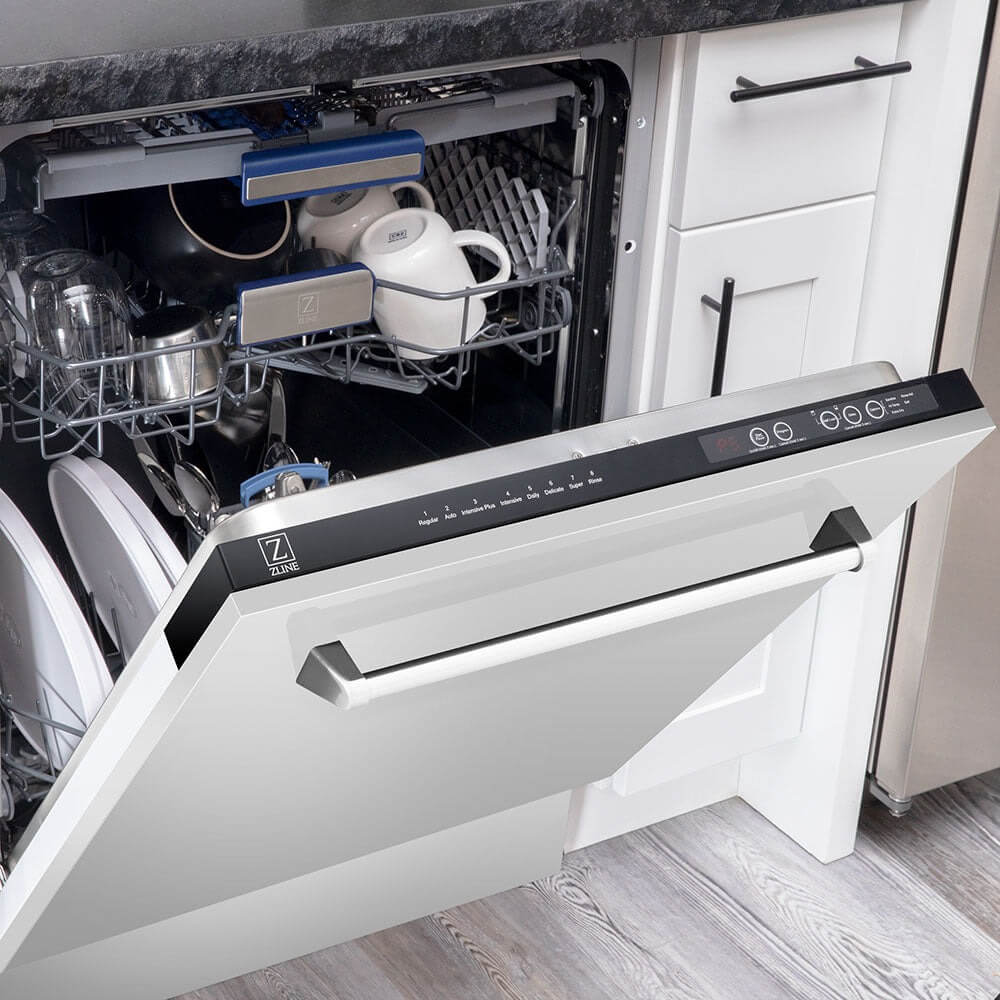
The dishwasher tub is a critical component that often gets overlooked in kitchen cleaning routines. Ensuring it's free from grease, soap scum, and food debris not only contributes to a hygienic kitchen but also extends the life of your appliance. When in doubt, follow your user manual’s maintenance instructions; however, here are a few products you have around the house to get the job done:
Vinegar:
Turn your dishwasher on long enough to allow the bottom to fill with water. Don't add detergent when you do this. Once there is water in the bottom, stop the cycle, and add two cups of vinegar. Close the dishwasher door and allow it to sit for 30 minutes. Then continue running the cycle.
Baking Soda:
Sprinkle some baking soda on the bottom of your dishwasher tub, and run a short cycle with the hottest water possible. Combine this with the vinegar method for the ultimate clean!
Conclusion
Keeping your stainless steel appliances in pristine condition doesn't have to be a chore. Armed with the right knowledge, you can easily tackle common issues like dents, scratches, water stains, grease, and fingerprints. Remember, regular maintenance is key to preserving the beauty and functionality of your appliances for years to come. For more detailed information, our comprehensive guide is your go-to resource for all things stainless steel.
Connect with us on social media!
Facebook: The Range Hood Store
Instagram: @therangehoodstore
YouTube: The Range Hood Store
Pinterest: @TheRangeHoodStore
FAQs
Why do stainless steel appliances show fingerprints so easily?
Stainless steel surfaces naturally attract oils from skin contact, which makes fingerprints more visible, especially under bright kitchen lighting. Higher-polish finishes tend to show fingerprints more than brushed or fingerprint-resistant stainless steel.
What is the best way to remove fingerprints from stainless steel appliances?
Fingerprints are best removed with a soft, damp microfiber cloth followed by a stainless steel polish. Using a dedicated stainless steel cleaner helps lift oils while leaving behind a protective layer that reduces future smudging.
How can I prevent fingerprints from coming back so quickly?
Regular polishing creates a thin barrier that helps repel oils and moisture. Wiping appliances lightly after use and avoiding abrasive cloths also helps maintain a cleaner surface for longer periods.
Can dents in stainless steel appliances be fixed?
Some dents can be reduced or removed depending on their size and location. If the back of the panel is accessible, gentle pressure may push the dent outward. Suction tools like plungers or automotive dent removers can also help with shallow dents.
Does the hot-and-cold method really work for dents?
In some cases, yes. Rapidly heating the metal and then cooling it can cause the stainless steel to contract and expand enough to lessen the dent. Results vary, and this method should be used carefully to avoid damaging finishes or internal components.
What should I do if my stainless steel appliance has scratches?
Light scratches can often be minimized by cleaning along the grain using a gentle abrasive like a baking soda paste. Deeper scratches may require a stainless steel scratch repair kit designed specifically for appliances.
Why is it important to clean stainless steel in the direction of the grain?
Stainless steel has a visible grain similar to wood. Cleaning with the grain helps prevent new scratches and ensures a more even, streak-free finish.
How do I remove water stains from stainless steel appliances?
Water stains are commonly caused by mineral deposits. They can be removed with rubbing alcohol, a stainless steel cleaner, or mild household solutions like diluted lemon juice and baking soda. Always wipe dry afterward to prevent new spots.
Are water stains more common in certain areas?
Yes. Homes with hard water tend to see more mineral buildup, especially around dispensers, handles, and horizontal surfaces where water can pool.
What is the safest way to remove grease from stainless steel?
Grease should be removed with a cleaner formulated for stainless steel or a mild baking soda paste followed by thorough rinsing. Buffing with a clean microfiber cloth restores shine without damaging the surface.
Can household oils be used on stainless steel?
Small amounts of oils, such as baby oil or olive oil, can help restore shine and reduce streaking. They should be used sparingly and buffed thoroughly to avoid residue buildup.
How often should stainless steel appliances be cleaned?
Light daily wiping helps prevent buildup, while deeper cleaning and polishing once a week keeps appliances looking their best. High-use areas may require more frequent attention.
How do I clean the inside of a stainless steel dishwasher tub?
Running a cycle with vinegar helps break down grease and mineral buildup. Following up with a baking soda cycle deodorizes and refreshes the tub, improving both cleanliness and performance.
Will improper cleaning damage stainless steel appliances?
Yes. Abrasive pads, harsh chemicals, and bleach-based cleaners can permanently damage stainless steel finishes. Always use non-abrasive tools and cleaners designed for stainless steel surfaces.
Are fingerprint-resistant finishes easier to maintain?
Fingerprint-resistant stainless steel finishes are treated to reduce smudging and streaking, making them easier to maintain than traditional stainless steel. However, regular cleaning is still recommended.
What cleaning products work best on stainless steel appliances?
Products specifically formulated for stainless steel offer the best balance of cleaning power and surface protection. Cleaners from trusted brands like ZLINE are designed to remove fingerprints, grease, and stains while preserving the finish.
Is regular maintenance really necessary for stainless steel appliances?
Yes. Consistent maintenance prevents permanent staining, reduces wear over time, and helps stainless steel appliances retain their original appearance and value for years to come.